
Art & Environmentalism

Art, broadly speaking, is an aesthetic vehicle that communicates an idea or message. In some cases, for some artists, that message can be straightforward: "this flower is beautiful," for example. Other artists may be called to react to their specific moment on planet Earth, and wish to communicate their insights into the intellectual, social, or political movements of their day. The latter is simply another approach.
In my artistic practice, I am responding to current issues of pollution, land use, and climate change, much of it site specific when conceiving of an artwork. Because of this, I feel responsible to engage with contemporary science at a very engaged but layperson level. In my photographs, I aim to artistically reflect ecological matters without pedantically illustrating the issues I’m addressing. I use color and stylized imagery to draw people to look more closely at the images of landscapes, inviting a viewer to be inquisitive.
One of the purposes of art is to reveal something new to the viewer. In some instances, art can be used as a sugar coating on a bitter pill, an easy inlet of difficult information. Or it can be a slap in the face. It can raise awareness or point to a problem, but more importantly, it can be convincing, informative, persuasive. It has the ability to be a device by which opposing groups come together in a unified way.
Art, for environmentalism, has an opportunity to inform and persuade. Different artists' effective strategies have ranged from direct to implied — running the gamut from informational, confrontational, or satirical, to poetic, metaphoric, fantastical, and on. No one strategy is inherently more effective at persuading than another. But it’s essential for artists to consider which approach suits their artistic practice, their way of being in the world, and which strategy will be most effective at communicating environmental issues with a specific audience.
It might be more compelling to smuggle ideas into an artwork through symbols and visual analogy. Many myths around the world have been and continue to be effective at motivating land stewardship this way. Or it may be more powerful to speak directly or even interactively. There are artists working through direct protest, fundraising, or through creative posts on social media in support of indigenous water rights, urban farming, and so many other critical environmental issues. All of these approaches have their own role to play in the multifaceted challenges facing the environment.
From almost the very beginning of photography, a photographic image has been used as a vehicle for activism. It can report, catalog, represent, document, allude to possibilities. It is easily recognizable and familiar. It can convey a message in a heartbeat and leave a long burning memory.
It can also change meaning through a shift of perspective and context. Looking at an old image through the lens of new understandings and the passing of time will impact how that image is perceived. I’m thinking of the historic photographs showing mountains of bison skulls after a slaughter. At the time, they were taken to show the unlimited bounty, but now show only the horrific atrocities. Or, a photographic survey image of Hetch Hetchy Valley, a once richly beautiful section of Yosemite National Park, now flooded to make way for a reservoir for San Francisco. In hindsight, a telling image of what could still be if not for greed disguised as industrial progress.
Looking back at successful photographic images created to change or a call to action, contextualization is key. I think of Lewis Hines' images of children working in adverse conditions; Rosie the Riveter used as propaganda to rally labor support in the United States during the Second World War; the video footage of the killing of George Floyd which became a call for action to end brutality within certain law enforcement situations. Images can hit the mark within the right context at the right time. It is a tool used to convey a message. The correct message that is recognizable, meaningful enough, creates a call to action, pushes concepts, brings positive change, but most importantly unites people around a similar cause.
For years I’ve been wondering about the damage that I as an artist am responsible for, and how I can help change things. What does it mean to be an environmentalist as a photographer? It’s almost in contradiction. Digital photographers think: Well, we’re not pouring chemicals down the drain as much anymore, which is good. But electronic manufacturing and electronic waste is a very bad thing, and might actually have a greater impact than traditional chemistry, and on a bigger scale. I think about the footprint that we leave. My hope is that my images are persuasive in order to get people thinking in a different way about these things.
In the end there is no one environmental villain we can point to, but instead, a bevy of human and technological interventions that we humans have imposed on the land around us. The topic of environmental destruction has taken on new creative urgency for me in recent years as we confront climate change and the continued dwindling of our natural resources. Over the past decade and a half I have continued to expand the scope and ambition of my work, creating site-specific projects in environmentally significant locations like California’s redwood forests, the salt flats of the American west, and in the rust belt of industrial Ohio.
But all artists and artworks are not obligated to tell an audience what specific next steps to take once those folks have had an awakening. More often, the best people to do this are the ones who are educated and practiced in the best steps to take: the activists, the educators, the scientists. In some instances, an artist is one of these experts in addition to their artistic practice, but not always. All the different roles that people play in society – artists, activists, teachers, private citizens — can effectively complement one another to bring about a positive change for humans and our planet.
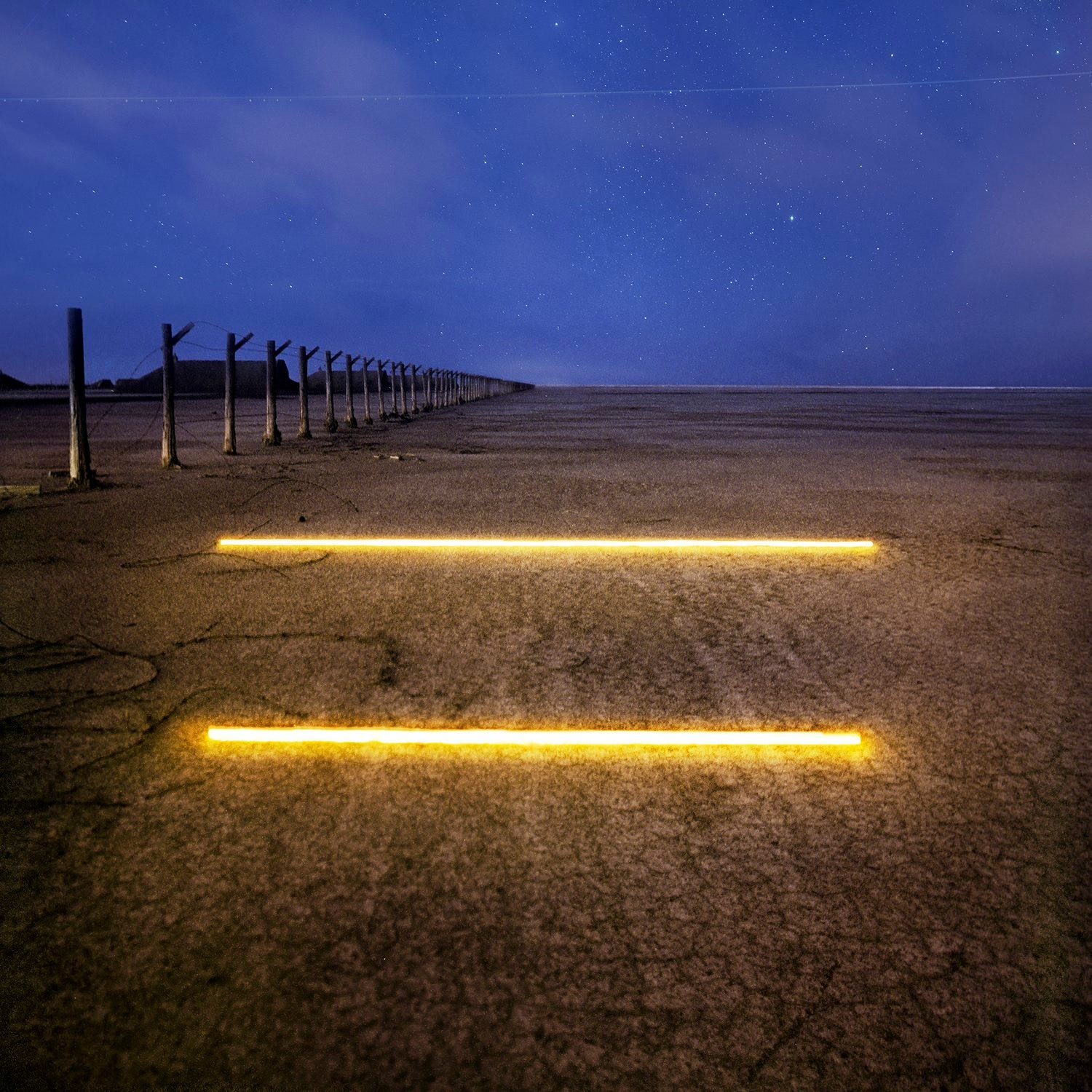
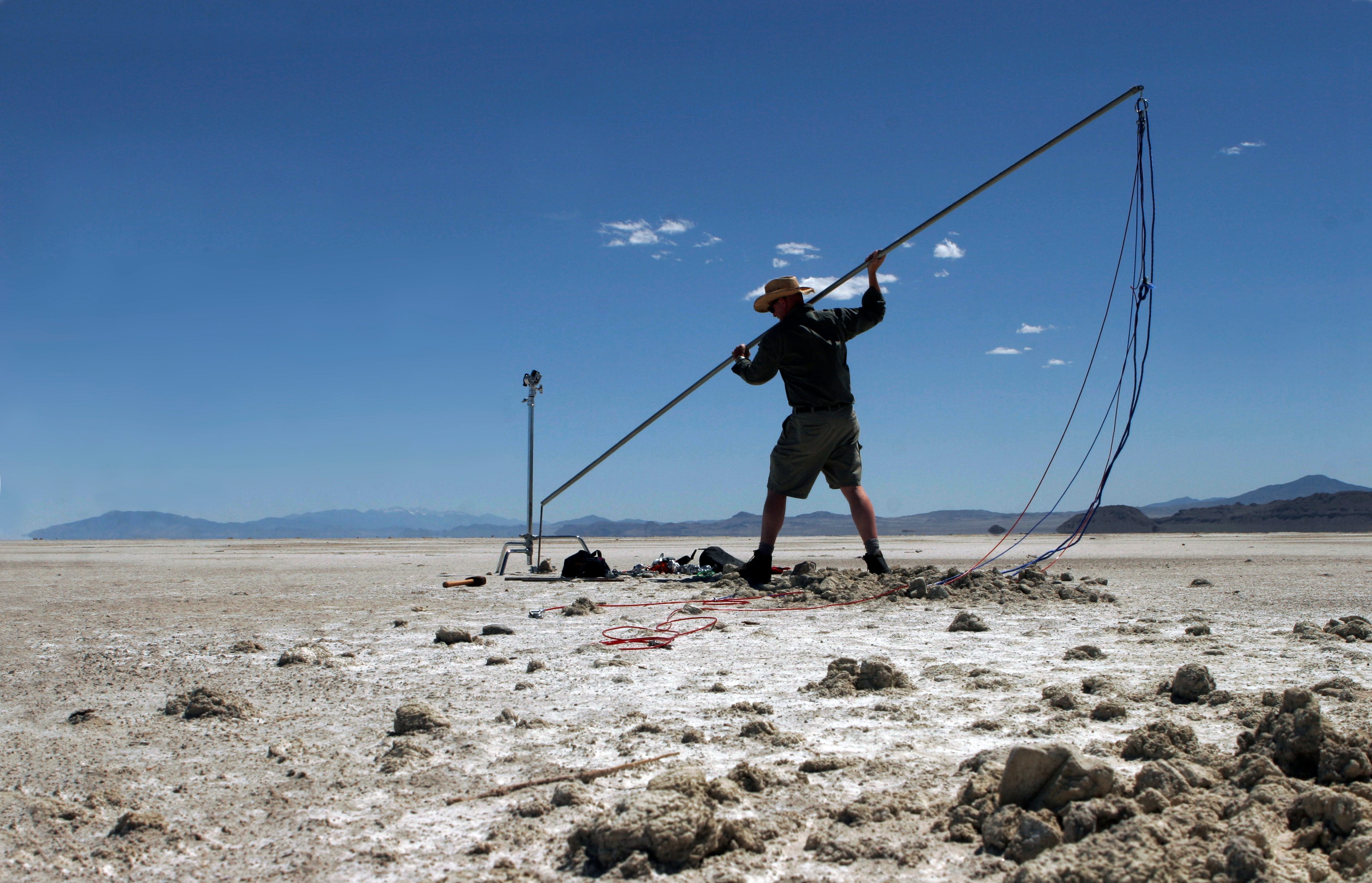
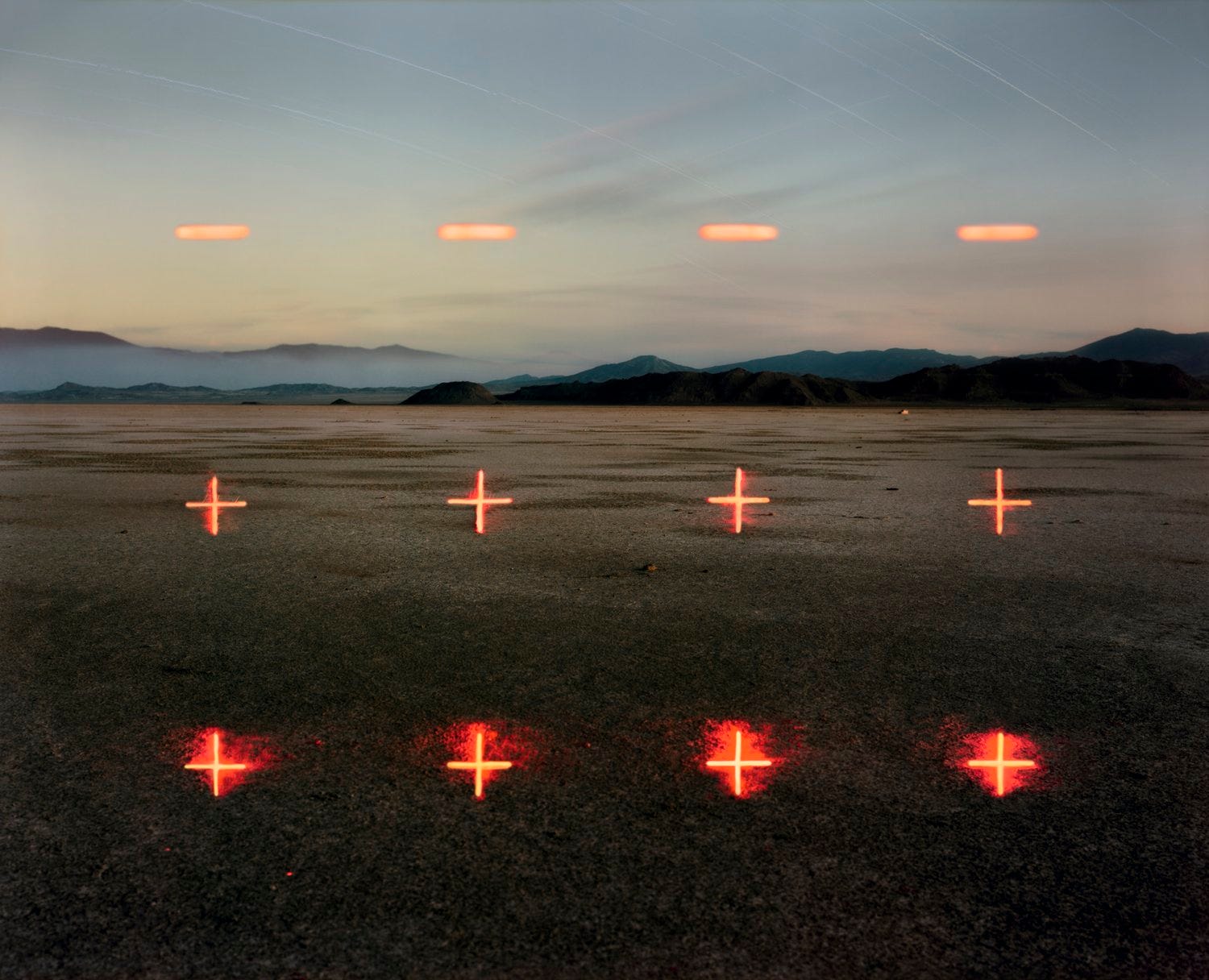
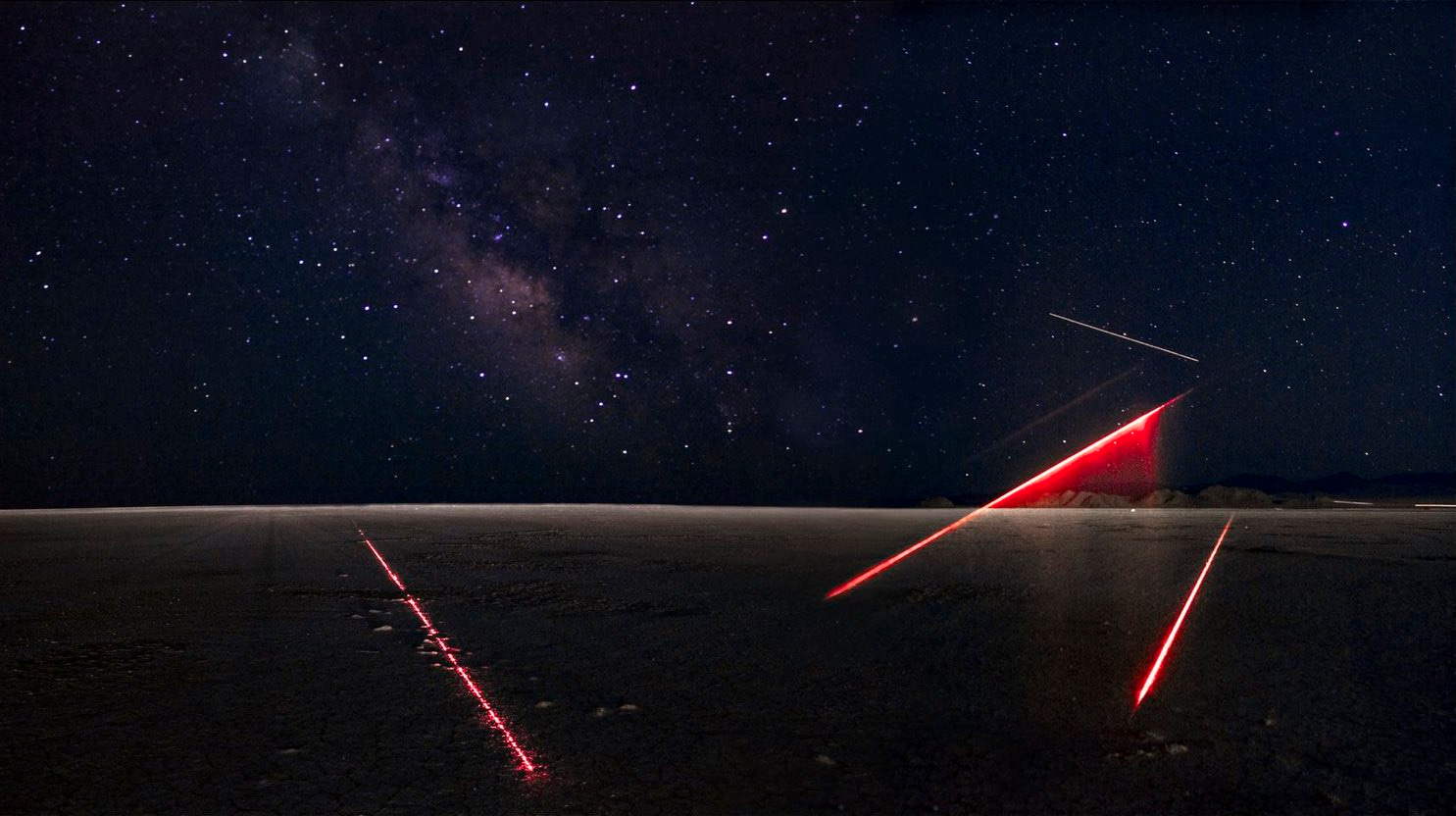
The images in this newsletter were taken when I was an artist in residence at the Center for Land Use Interpretation: Wendover Residency Program in Utah. The center’s mission is to increase “knowledge about how the nation’s lands are apportioned, utilized, and perceived,” which dovetailed perfectly with my own artistic interests. Because of its location near the Bonneville Salt Flats and on the site of a historic Air Force Base that was used as an atomic bomb testing site, I became increasingly aware of the ecological fragility of the salt flats and the desert ecosystem as a whole.
I worked at this site for two weeks, setting up in the morning, and taking a nap during the day, as I would be up most of the night photographing. And since I took the 8x10 camera, the exposures were long. While the lens was open on the 8x10, I would play with a Canon 20D. The salt flats actually took a real toll on that camera, and all the dust just destroyed it. Other times during long exposures, I would just lay in the back of my dearly missed yellow S10 Chevy Blazer, and be in pure amazement looking at a sky filled with so many stars. I had never seen anything more awe-inspiring — the flat empty landscape with a wild immensity of stars and the Milky Way above.
As always, thank you to everyone who supports my artistic practice, whether that’s in the studio, at a cultural institution, or just reading these newsletters.
Wishing you all well.
- Barry