
Before the Shutter Clicks

There’s a scene in Public Eye where Joe Pesci is driving down the road and looking at all the possible photographs he could make. Like the character in the film, I am endlessly on the hunt, searching for a location where I can make my work. It is an obsession, and I cannot turn it off. My eyes are always looking for locations, especially if I am in a place I have never been to. With places that are familiar, I have a few favorite spots that I am always drawn to and constantly revisit. I like to check up on them to see what has changed and how it is doing, like an old friend. Some locations haunt me, and they're consistently on my mind. These are places where I know underlying ideas are there, but I can’t quite grasp or envision what I need to do in this possible location.
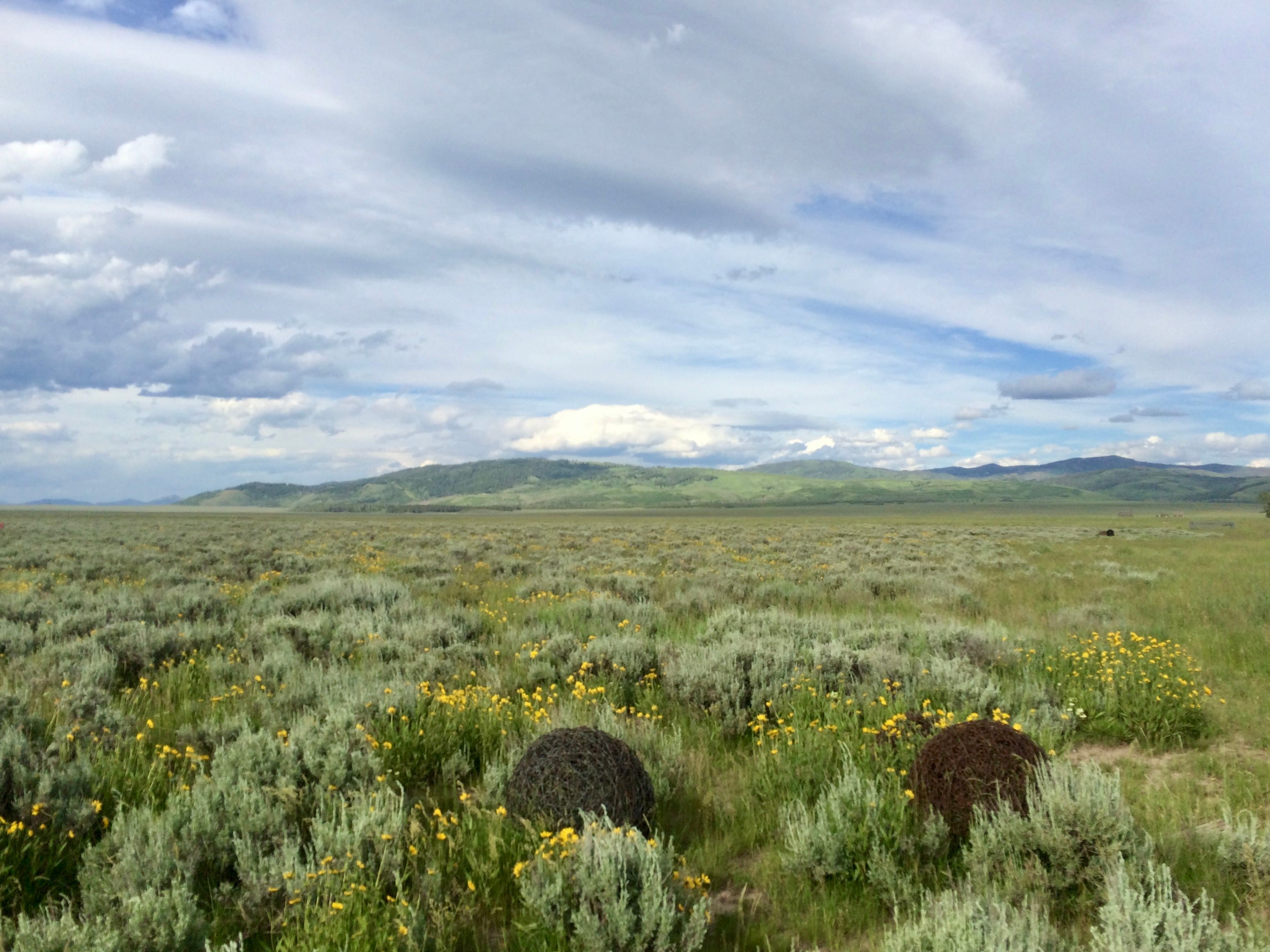
I’m always trying to figure out what to make next, and how to make it. Whenever I come to a new location that I’ve never seen before, I want to investigate it. I want to see what it has to offer. It’s almost like a game. At times, I’m trying to find a landscape that matches the drawing for an idea. Though typically, the location drives the idea for a composition and the elements that exist within it. Usually there will be something in the foreground or off in the distance that draws me in, and I start parsing through the possibilities.
My making process is slow. I will contemplate what to make at a location for a long time. Or I’ll search endlessly for a site that will dovetail with an idea for a piece I have in mind. There are sketches that I keep, and I know I will someday find the correct location. I will not make a piece until I am confident about the place, installation, or object, and how they will work together harmoniously or discordantly. Safety issues are always a concern, so the danger of photographing in a particular space may prevent me from making the piece. It can be frustrating to realize that it’s just not feasible to carry out an idea, but that goes with the territory of working in outdoor spaces.
Naturally, logistics are always on my mind. How am I going to pull that off? How much do I have to build? How will things get built? How will I access the site? How will I get all my equipment to the site? How will I set everything up on location? And on and on and on. The installation build is different in every space. So while I may have a system for how I work with certain materials and photography equipment, the way everything comes together for each shoot varies. However, I tend to go through the same routine beforehand of location scouting, sketching, material testing, planning, and coordinating each element of an installation and shoot.
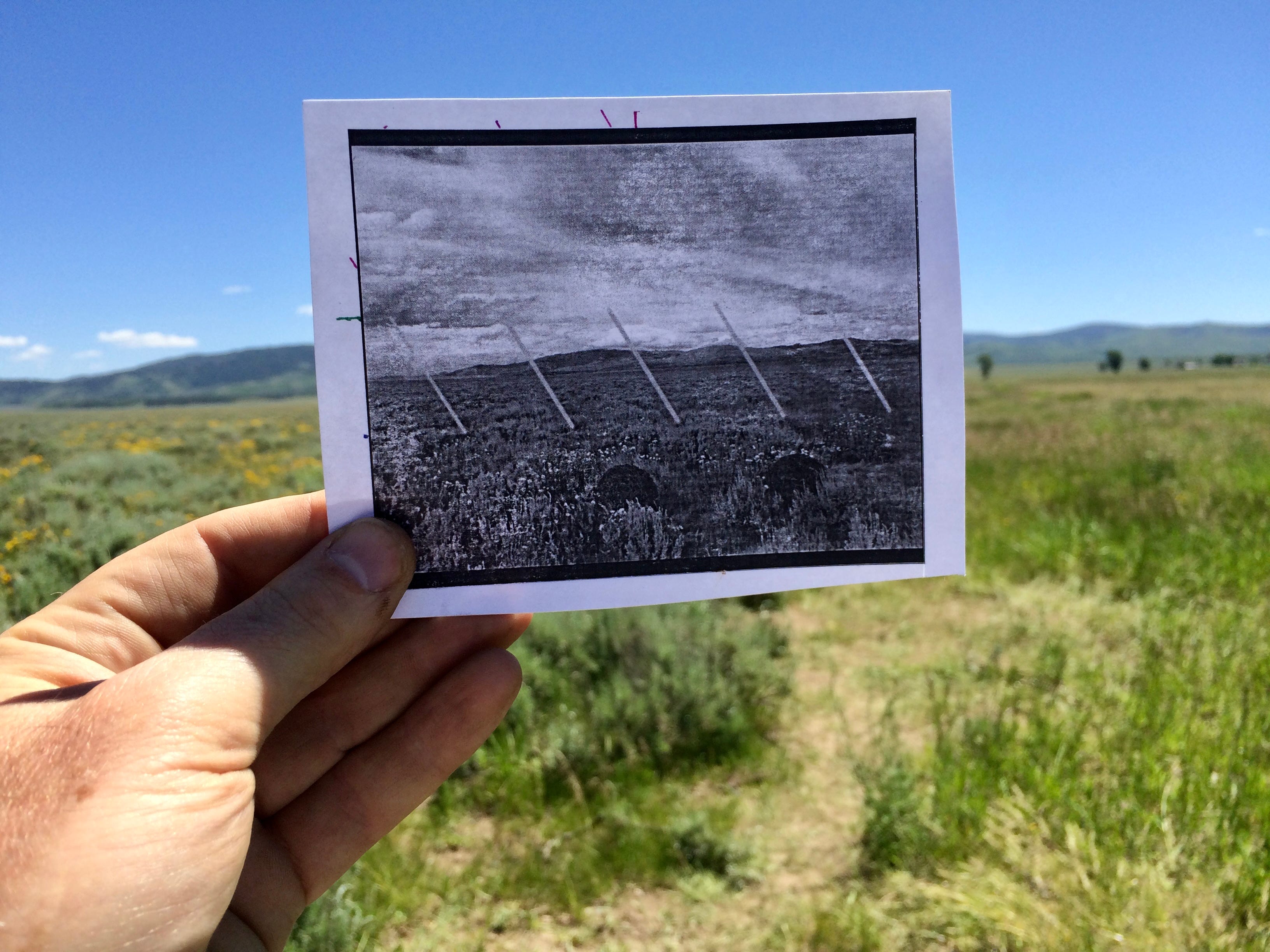
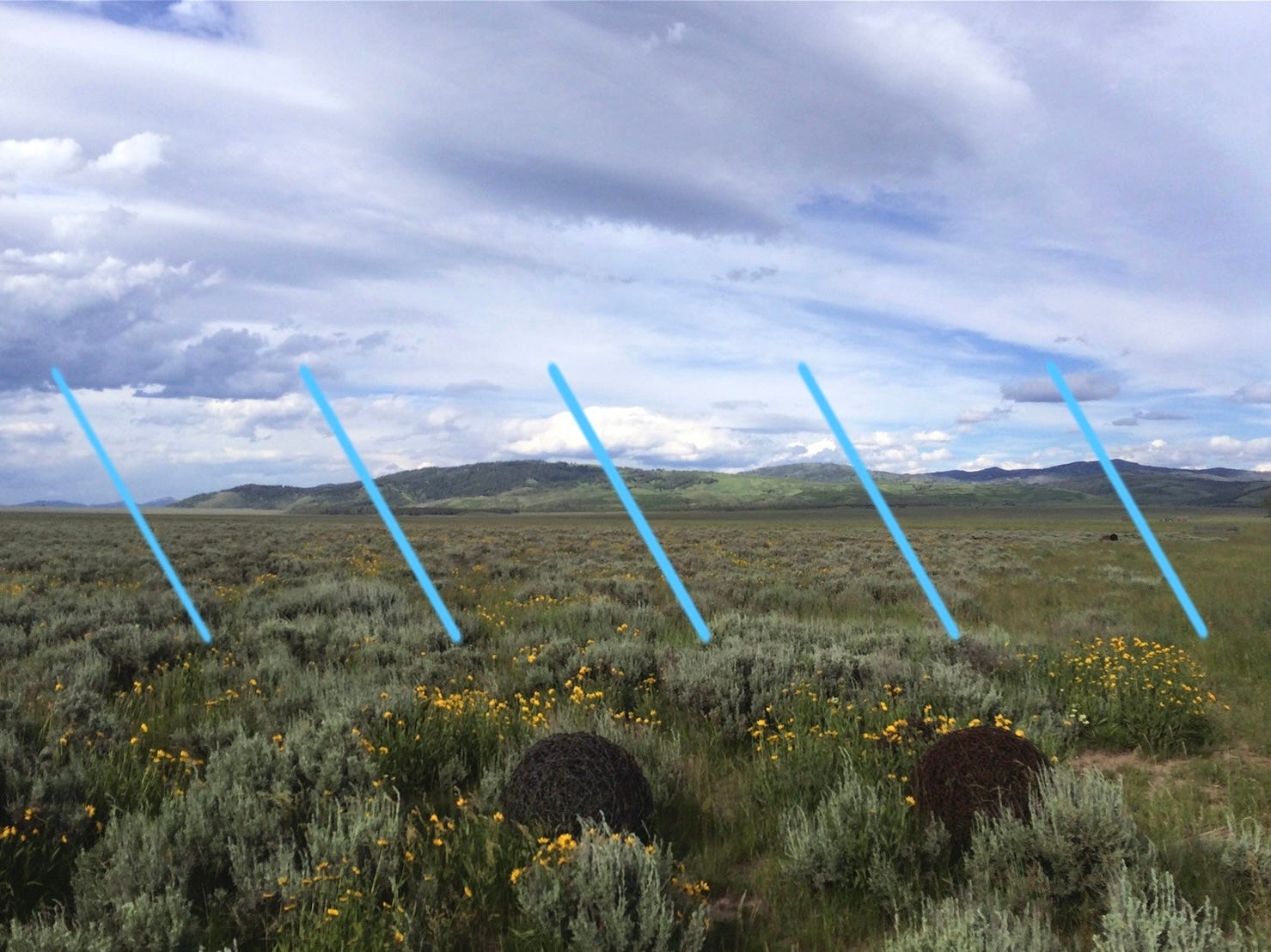
In recent years, I have gravitated towards working through my ideas with digital sketches more often than pencil drawings in a sketchbook. Although, when I look back at my old sketchbooks, I find myself nostalgic. Abstractions are present in the pencil drawings and I find them artistically more interesting. But from a practicality standpoint, digital sketches tend to be quite literal and get right to the point, helping me work through various scenarios and logistics at a faster pace.
I take countless location scouting photos, working through sight lines and compositions. Once I settle on one (or a few) that I like, I make little notes and try to figure out what I want to put in that location. Using Adobe Illustrator, I create sketches, playing with shapes and colors, to find that ideal match that just works.
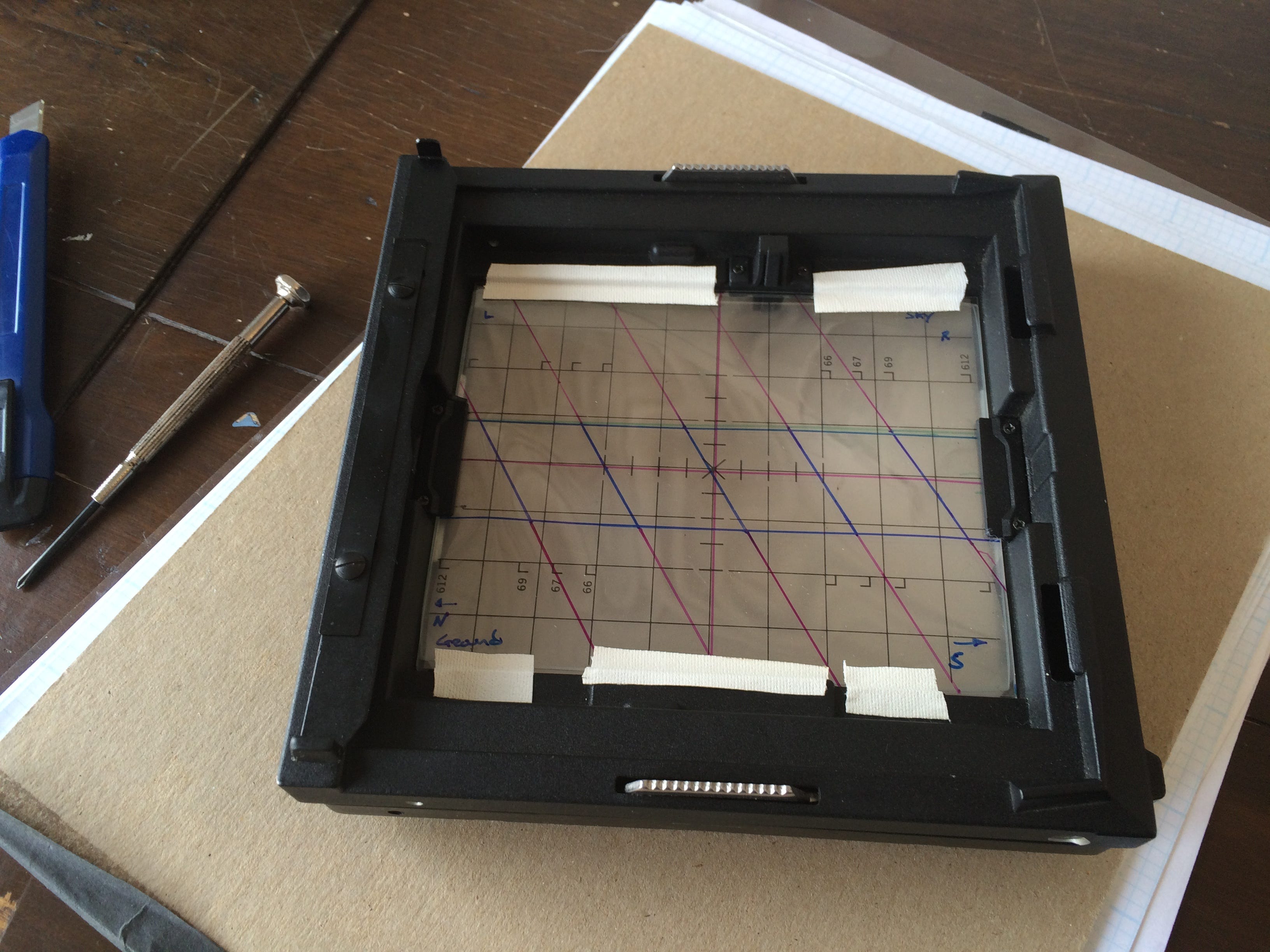
Measuring is becoming a bigger thing in my studio practice than it was before. Often I’ll sketch a precise geometric line drawing on a piece of acetate that I then tape to the glass plate on the back of a 4x5 or 8x10 camera. This allows me to better estimate where the light structure will be installed within the picture plane. Then there’s a lot of walking back and forth trying to figure out where a line starts and ends, are things lining up correctly, and so on. Whether I have assistants with me or not, there tends to be a lot of back and forth and double checking.
When I get a new light source that I've never photographed before, I’ll do tests just to see what it looks like. For more complicated installation builds and shoots, I’ll do some tests in my backyard or studio to work through things beforehand to have a better idea of what it will look like. It can be helpful to practice setting up an installation to make sure that I have the most effective, efficient, and safe way to build it. Otherwise, I tend to not do test shots beforehand. I just kind of go for it on the night of a shoot.
When it comes to building the glowing shapes that I photograph, I prefer to use EL wire lights with rechargeable batteries because I can reuse them over and over again and not create more waste. If I’m not attaching a form to trees or other natural supports, I bring in metal booms weighed down with sandbags. The installations are then mostly built with rope and neoprene fish line. Spiderwire is my brand. I think it’s the strongest and it disappears incredibly well at night in the woods. (I’m not sponsored! Though if someone from Spiderwire is reading this, I’d gladly welcome it.)
If I’m shooting in a location with a lot of sky in the frame, the string tends to show up a little bit. Which leads to another question I’m always asking: How much of the rigging can I hide? In the early days of my practice, I was trying to hide as much as possible. As things have evolved, I don’t mind Photoshopping out the leg of a stand or a support rope, but I still try to hide as much as possible to avoid relying on Photoshop. If I’m using that program, it’s for color balance, changing the contrast a little bit, or maybe boosting the luminosity. But only just a touch. I don’t really like to employ too much Photoshop in my work.
Building structures on site has been happening less in the past few years. I want to make them more effective and efficient. I'm looking for ways to make them more durable and reusable, and constructed from materials that are less harmful to the environment. I have a few ideas for new materials and support structures that I’ll soon be sorting through with a friend in fabrication, and I’m very excited to see the possibilities. Ideally, these solutions will help me get to a site, set up, shoot, and pack up much more efficiently and with a smaller footprint.
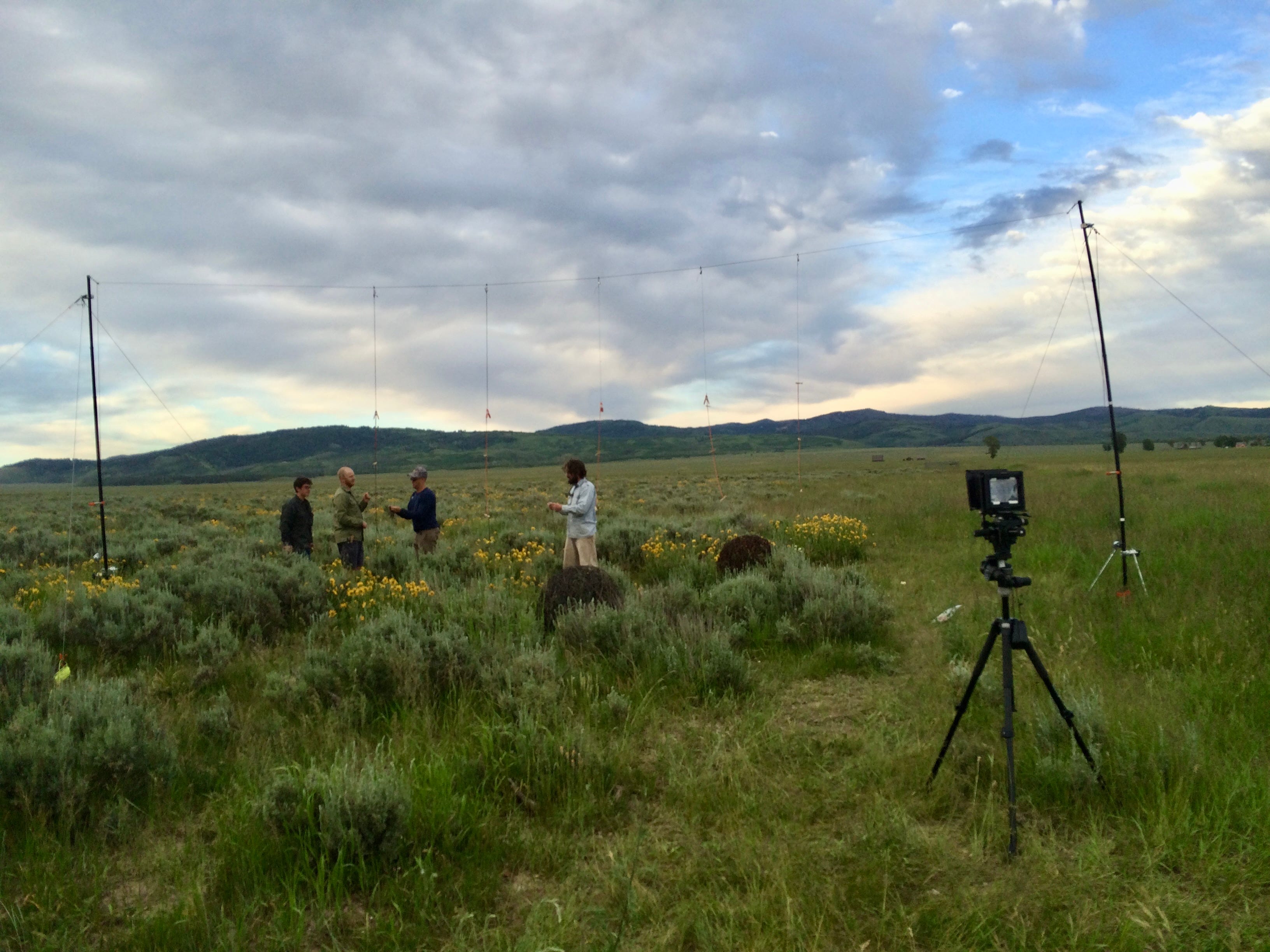
Weather is always a factor, so I’m constantly checking the forecast as a planned night of work approaches. As far as light pollution goes, I usually look at a location at night to see how it’s affected. If needed, I’ll take a few shots to see how much light is overpowering the space. It helps me have an estimate of how long I’ll need for exposures and plan accordingly. I learned early on that a cloudy day is great for getting color in the sky. I love it when it’s cloudy and the sky turns yellow, orange, green, or a pinkish purple. From the very beginning I thought the sky was like a cyclorama in the back of a theatre or dance production. It’s a white or light blue fabric that changes color depending on the light that is shown upon it. I have a background in theatre — its influences are hard to shake.
Once everything is in place and the camera is ready for its first long exposure, it’s time to get comfortable and settle in for a long night. But those are stories for another day…

The images featured in this newsletter are from when I was an artist in residence at Teton Art Lab in Jackson, Wyoming. I’d like to extend my appreciation to Scotty Craighead, Ben Roth, Rachel Greener, Travis Walker, Ryan Stafford, and Tony Birkholtz. They are all very kind, intelligent, and thoughtful artists who gave a tremendous amount of energy, support, and time to help bring my ideas into fruition. My experience in Wyoming wouldn’t have been nearly as productive and impactful without their generosity. And a special thank you to Drs. John and Frank Craighead for their important contributions to grizzly bear research, protection of wild rivers, and outstanding conservation efforts.
Thank you for continuing to tune in and support the various aspects of my artistic practice. A new school year has begun so I won’t have as much time in the studio in the coming months, but rest assured that I will definitely be searching for new locations and cooking up ideas.
Wishing you all well.
- Barry